Exploring the psychology, accessibility challenges, and technical implementation of translucent interfaces in enterprise software.
The Shift from Flat to Deep
If you look at the enterprise software of 2015, it was entirely flat. Solid whites, harsh grays, and rigid, boxy layouts designed purely for utility. But as users came to expect the same visual polish in their work tools as they do in their consumer apps, B2B SaaS design had to evolve.
Enter Dark Glassmorphism.
More Than Just a Pretty Shadow
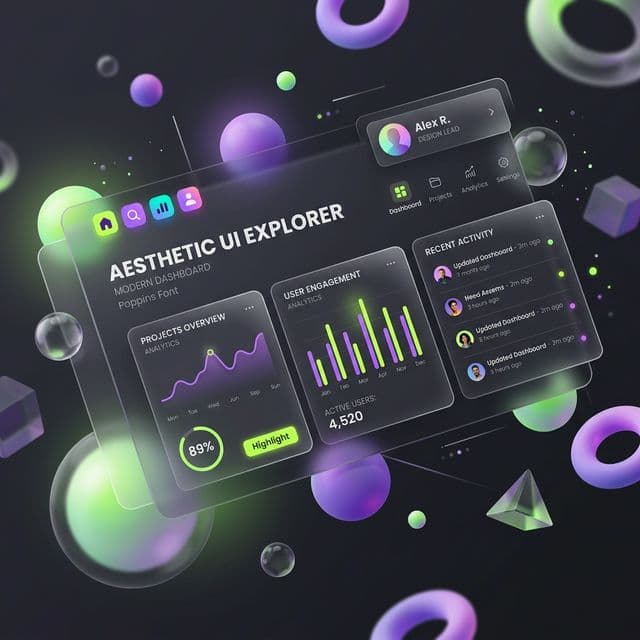
Dark glassmorphism — characterised by translucent, blurred backgrounds, subtle inner borders, and vibrant neon accents — isn't just an aesthetic trend. It serves functional UX purposes:
- Hierarchy Through Depth: Instead of relying entirely on color contrast, glassmorphism uses physical depth (simulated via
backdrop-filter: blur) to establish visual hierarchy. Floating modals feel physically closer to the user because you can see the blurred UI beneath them. - Reduced Eye Strain: Pure black (
#000000) backgrounds with bright white text cause halation (a blurring effect around text) for astigmatic users. Dark glassmorphism utilizes deep off-blacks (like our#0a0a0a) and overlays them with slightly lighter, translucent panels. This softens the contrast while maintaining readability. - Premium Perception: Transparency and blur historically require high GPU compositing power. While modern browsers handle this easily, the visual effect still triggers an unconscious association with high-end, powerful native software (reminiscent of macOS or VisionOS).
Technical Challenges
Building high-performance glass interfaces isn't free. Heavy use of backdrop-filter can cause scroll lagging if applied poorly.
At CODO, our approach relies on CSS variables and strict hardware acceleration for animations. We isolate glass panels onto their own compositional layers (will-change: transform, opacity) to ensure that even complex 3D-styled dashboards render at a flawless 60fps on average hardware.
Elena Rostova
Head of Design · CODO AI Innovations
Continue Reading